Brussels 20.03.2026 This year Klarafestival opens with a flamboyant Yuja Wang performing Maurice Ravel’s Piano Concerto for the Left Hand in D major (1929–1930). The masterpiece brilliantly interpreted by Yuja Wang, creating a breath-taking experience for Brussels audience in a historic Henry Le Boeuf Hall in Bozar Art Deco building designed by Victor Horta between 1919 and 1928. The one-movement concerto commissioned by pianist Paul Wittgenstein, who lost his right arm in World War II. It is renowned for creating the rich, full sound of two-handed piano music using only the left hand, blending dark, melancholic themes with jazz-influenced sections.
20.03.2026 Klarafestival Yuja Wang performing Ravel’s Piano Concerto for the Left Hand (1929-30). pic.twitter.com/cWaSNTEFgJ
— Anna van Densky (@AnnaVanDensky) March 21, 2026
https://platform.twitter.com/widgets.js
The programme assembls Jean Sibelius and Maurice Ravel, while musically distinct, share a foundation as major late 19th/early 20th-century composers who, despite differing from Impressionist norms, were both masters of orchestration and color. They were contemporaries who valued structured, often “inward-looking” musical expression, and both often appear together on concert programs exploring early modern European music.
20.03.2026 Bozar, Brussels: Klarafestival – Esa-Pekka Salonen leads Swedish Symphony Orchestra. pic.twitter.com/JCjmkrtPfu
— Anna van Densky (@AnnaVanDensky) March 21, 2026
https://platform.twitter.com/widgets.js
Scandinavian serenity is represented by Sibelius, with his final Seventh Symphony in C Major. Only the central figure of Finnish classic music can make that perennial key sound so fresh. His pupil and fellow Neoromantic Einojuhani Rautavaara followed suit with his First Piano Concerto in 1969.
20.03.2026 Klarafestival March 20-29, Brussels. Bozar: Yuja Wang and Swedish Symphony Orchestra led by Esa-Pekka Salonen. pic.twitter.com/OvpqjVCgje
— Anna van Densky (@AnnaVanDensky) March 21, 2026
https://platform.twitter.com/widgets.js
The two Finns are set against an idiosyncratic French duo. Ravel went all-out for drama and virtuosity in his Piano Concerto for the Left Hand. Debussy, in turn, sketches his impression of the ocean waves in the three-part La Mer. The Finn Esa-Pekka Salonen leads the Swedish Symphony Orchestra in this orchestral opening concert in co-operation with Yuja Wang.
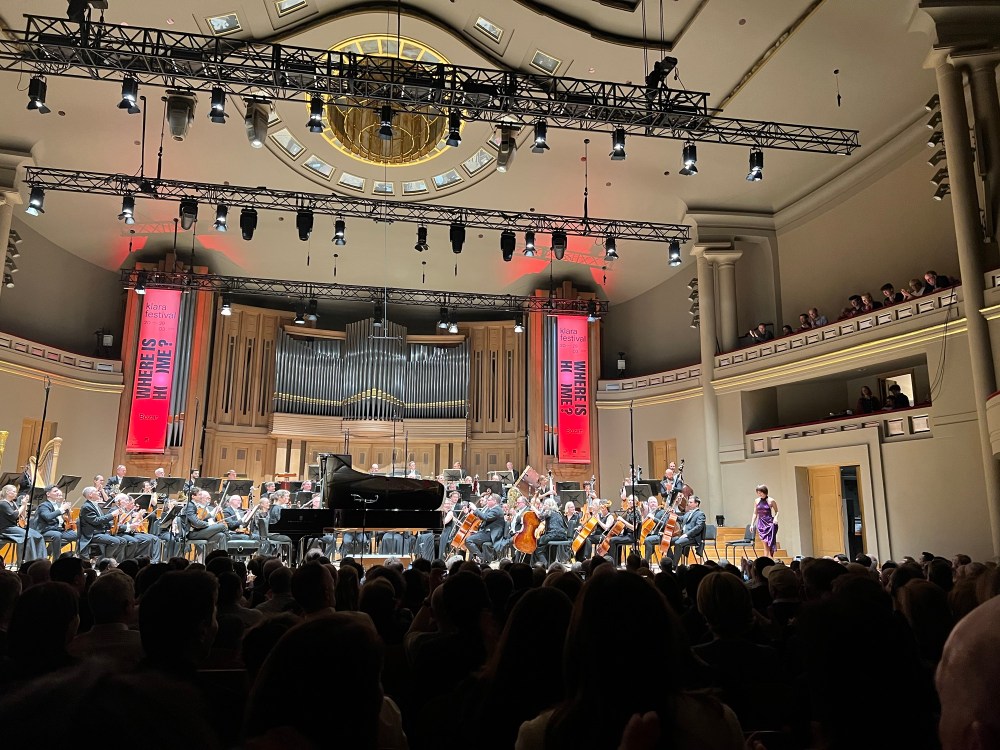
Chinese pianist Yuja Wang is a legendary international artitist from Chinese origin renown for her charismatic stage presence, virtuosity and strong creative personality. A former child prodigy, she is recognized as one of the most brilliant artists of the 21st century, often performing with major orchestras globally.
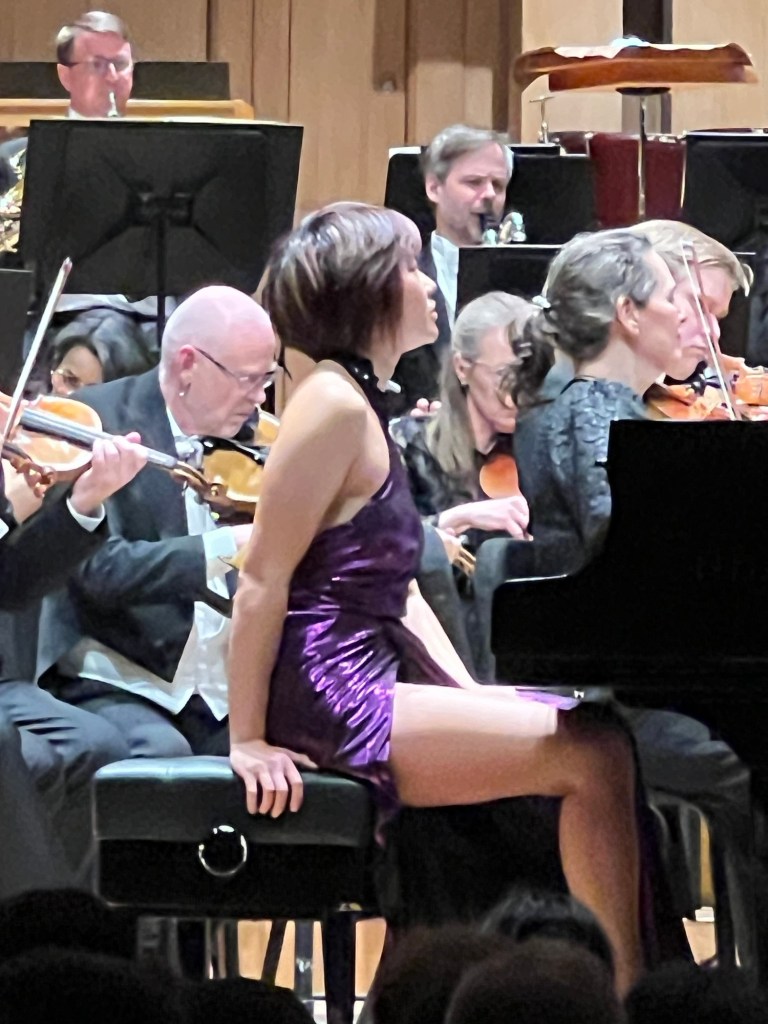
Yuja Wang’s performance of Jean Sibelius a brilliant fusion of technical excellence and emotional maturity. Celebrated for her refined virtuosity and expressive insight, Wang casts a modern and crisp approach in Sibelius’ repertoire. Wang’s seemingly effortless action encourages to align with the natural flow of existence of Sibelius creation, rich in internal tensions, matching the incredible energy of the Symphony with the powerful pianist persona.
Since then, she has collaborated with renowned orchestras such as the Los Angeles Philharmonic, the Vienna Philharmonic and the Royal Concertgebouw Orchestra, and with conductors such as Claudio Abbado, Daniel Barenboim, Gustavo Dudamel, Simon Rattle, Antonio Pappano and Yannick Nézet-Séguin. Her numerous recordings have been honoured with an ECHO, an Opus Klassik and a Grammy Award, among other accolades.
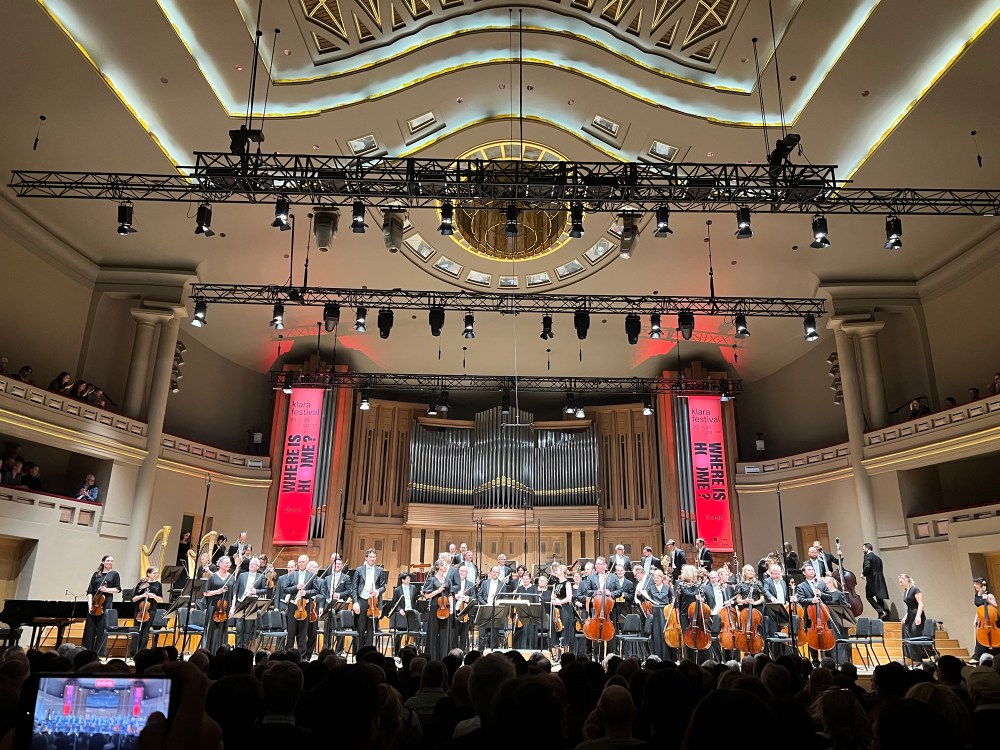
Swedish Radio Orchestra was established in 1925 alongside the first radio broadcasts in Sweden, and is permanently based at the Berwaldhallen in Stockholm. Modeled by extaordinary conductors such as Sergiu Celibidache and Herbert Blomstedt, it grew throughout the XX-th century into an orchestra of international renown.
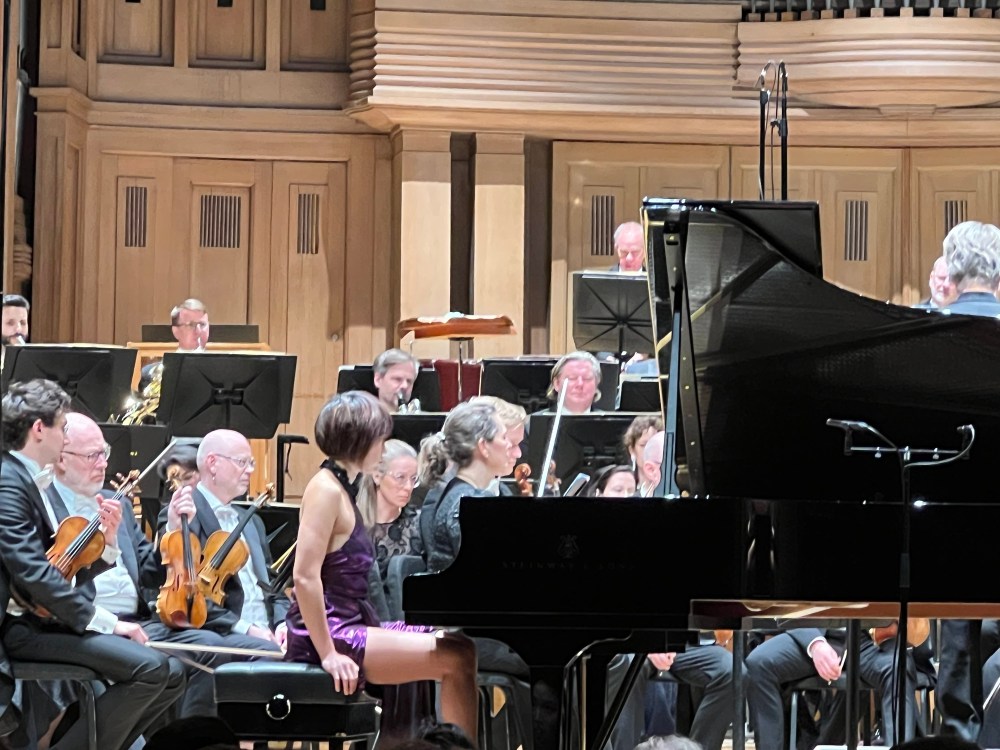
The Symphony No. 7 in C major was Sibelius last published symphony. Completed in 1924, it is notable for having only one movement, described as “completely original in form, subtle in its handling of tempi, individual in its treatment of key and wholly organic in growth”.
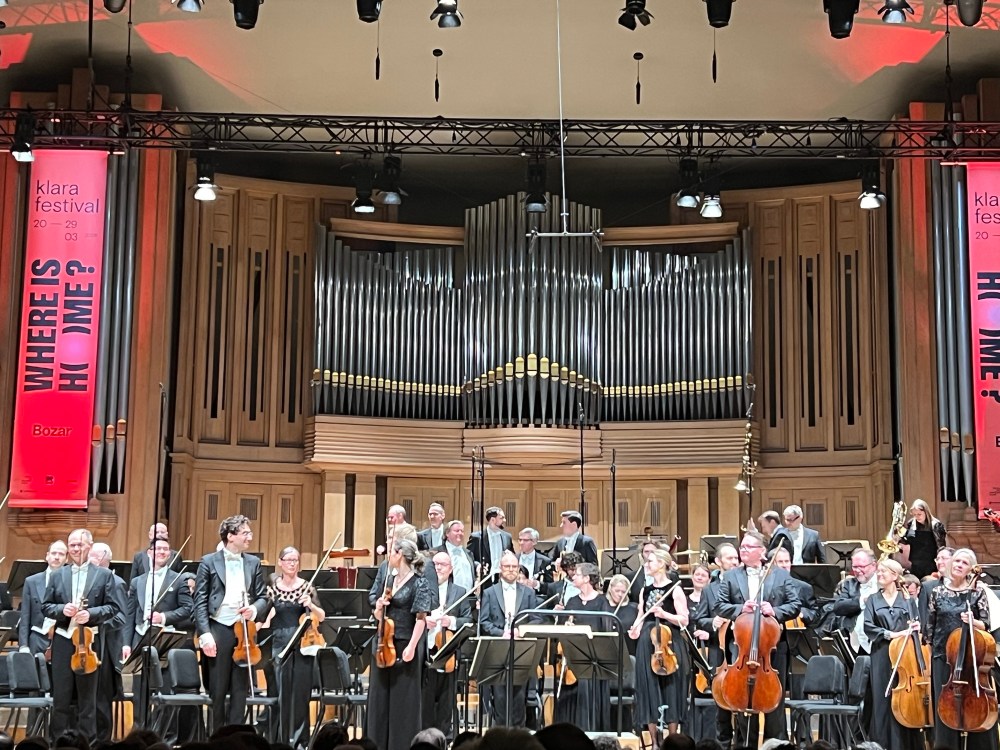
The Symphony No. 7 has also been called “Sibelius’s most remarkable compositional achievement”. Initially titled Fantasia sinfonica, it was first performed in Stockholm in March 1924, conducted by Sibelius himself. It was based on an adagio movement he had sketched almost ten years earlier. While the strings dominate, there is also a distinctive trombone theme.
Einojuhani Rautavaara is considered as a prominent Finnish composer, and certainly is the leading Finnish composer of his generation. His late mature style combined modernism with mystical romanticism . Wang’s performace of his Piano Concerto No. 1 has already conquered the hearts of audiences in California, who admitted, that it projected “such beauty and originality” that it “blows you away” in an “unprecedented way”.
Claude Debussy and Einojuhani Rautavaara both share a profound connection to atmospheric, nature-inspired, and mystical soundscapes in their composition styles, moving beyond traditional tonality to create intense emotional experiences. Despite working decades apart, both composers are noted for using unconventional scales, orchestral color, and a tendency toward lyrical, romantic expressionism.
In 2026, Klarafestival opened with a Franco-Finnish concert programme. Scandinavian serenity is represented by Sibelius, with his final Seventh Symphony in C Major. Only the emblematic figure of Finnish national music can make that perennial key sound so fresh. His pupil and fellow Neoromantic Einojuhani Rautavaara followed suit with his First Piano Concerto in 1969. The two Finns are set against an idiosyncratic French duo. Ravel went all-out for drama and virtuosity in his Piano Concerto for the Left Hand. Debussy, in turn, sketches his impression of the ocean waves in the three-part La Mer. The Finn Esa-Pekka Salonen leads the Swedish Symphony Orchestra in this orchestral opening concert. He renowned as both a composer and conductor far beyond his native Finland, being widely acclaimed as a visionary conductor and composer, noted for his precise, energetic, and intellectually rigorous interpretations. Following a transformative five-year tenure with the San Francisco Symphony ending in 2025, he is returning to the Los Angeles Philharmonic for the 2026-27 season, maintaining a reputation for technical precision, sleek orchestral transparency, and innovative programming.
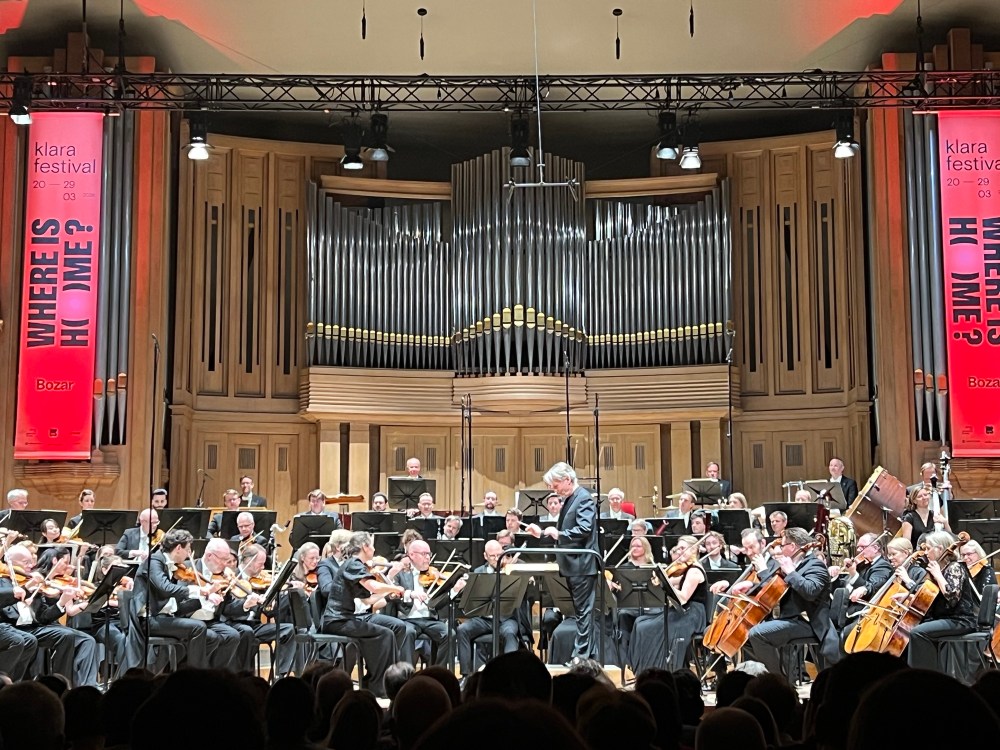
Klarafestival 2026, held from March 20–29, 2026, in Brussels (primarily at Bozar and Flagey), centers on the theme “Where is Home?”, exploring belonging, memory, and refuge. South African cellist Abel Selaocoe is the artist-in-residence, featuring three concerts, including a new concerto for the event. The festival continues its tradition of blending classical, jazz, and contemporary music with social engagement, partnering with UNHCR to support displaced people.

 EUROPE DIPLOMATIC