Brussels 18.03.2024 “The EU is living up to its commitments. The Ukraine Assistance Fund turns our words into action. With the fund, we will continue to support Ukraine defend itself from Russia’s war of aggression with whatever it takes and for as long as we need to” said Josep Borrell, the EU High Representative for Foreign Affairs and Security Policy.
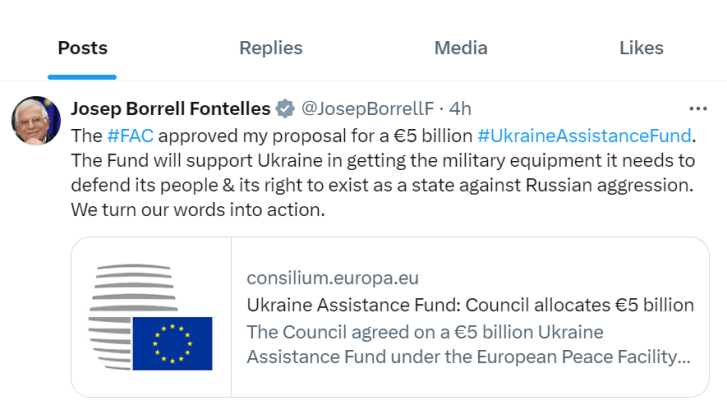
The newly established UAF will allow the EU to further support the evolving needs of the Ukrainian Armed Forces through the provision of both lethal and non-lethal military equipment and training.
The UAF will seek to maximise the EU’s added value in terms of delivering more and better operational support to Ukraine, complementing EU member states’ bilateral efforts, and focusing on increased joint procurement from the European and Norwegian defence industries.
In parallel, the Council decided today to improve the governance rules for the facility to make them more sustainable and adapt them to the new international circumstances. The improved governance rules will build on well-functioning national procurement structures as well as existing framework contracts, leveraging both a lead nation approach and the European Defence Agency (EDA), and including the joint procurement of the required defence equipment from the European defence industry and Norway – including small and medium sized enterprises – while allowing for flexibility in supply chains which may include operators established or with production facilities outside the EU or Norway.
The reimbursement of member states’ donations (i.e., from stocks, unilateral and joint purchases of equipment available in the market, and unilateral procurement) will be limited after a transition period.
Following today’s decision, the EPF financial ceiling will total over €17 billion for the 2021-2027 period.
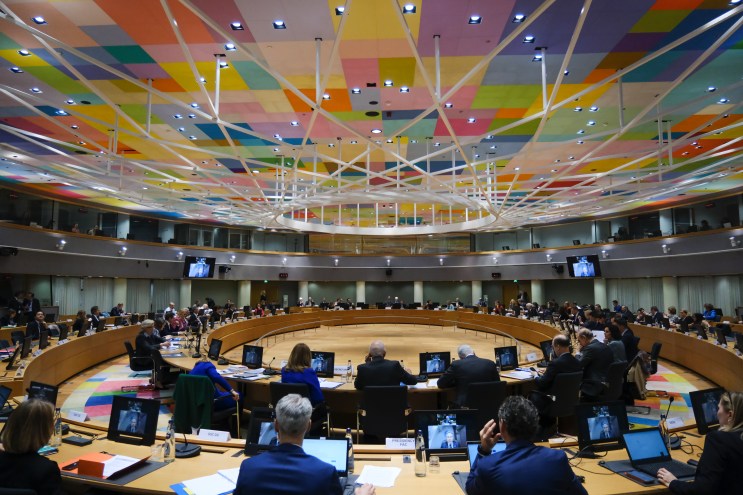
In Brussels Hungary Foreign minister Péter Szijjártó highlighted his government constructive abstention during the approval of a €5 billion increase to the European Peace Facility, ensuring Hungary faces no financial or political burdens from Ukrainian arms shipments.

“This means our €50 million contribution is obligatory, but its application remains our decision,” suggesting it could support initiatives like migration control or aiding the Sahel region and Western Balkans” the diplomat clarified.
Szijjártó criticized the EU’s strategy in Ukraine as a failure, pointing out the lack of political will to take responsibility for Europe’s losses. He addressed the dangers of European leaders’ statements on potentially sending troops to Ukraine, stating, “These are alarmingly dangerous statements; we respectfully ask our colleagues to refrain from them,” underscoring the importance of words in the current tense atmosphere.
Reflecting on NATO stance against direct confrontation with Russia, Szijjártó condemned any suggestions of troop deployments to Ukraine as a violation of NATO decisions. Further he expressed hope to the U.S. Secretary of State Antony Blinken that NATO members would avoid such actions, emphasizing,
“Sending ground troops to Ukraine by any EU country would set the continent ablaze, which we desperately want to avoid.”
Discussing the war’s direct impact, including refugee influx and agricultural challenges due to low-quality Ukrainian grain, Szijjártó stressed Hungary’s unique position and interest in a swift resolution for peace. To reduce border pressures, he noted an upcoming agreement with Andriy Yermak – Head of the Office of the President of Ukraine – for new border crossings, asserting, “Hungary is profoundly affected by the war’s tragic outcomes, pushing for the quickest peace possible.”

 EUROPE DIPLOMATIC