Attard, Malta 06.12.2024 Russia’s Foreign Minister Sergei Lavrov had devoted his speech to the criticism of the West during the 31 Organisation for Security and Co-operation in Europe (OSCE) Ministerial Council taking place on Malta December 5-6. The top diplomat used his plenary speech to attack the “pseudo-liberal” values, and warn that a new Cold War created due to the armed conflict in Ukraine may get out of control.
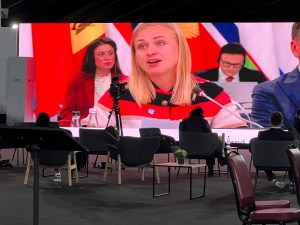
Lavrov is in Malta for the Ministerial Council meeting of the OSCE, which is taking place at the Mediterranean Fairs & Conventions Centre in Ta’ Qali. It is his first visit to Europe after the full-scale Russian invasion, and he was the third diplomat to address the meeting’s plenary on Thursday morning, December 5, among 56 nations present at the event.
“The Helsinki principles are just empty words to NATO and the EU… They expect others to abide by them but only as long as it is in line with their aims. The West wants to drive neo-colonial hegemony at any cost,” Lavrov accused.
The sharp criticism was not taken lightly, by all delegates. Foreign Ministers from Poland and Baltic States of Lithuania and Latvia all told the media as they entered the venue that they would walk out of the meeting when Lavrov would take floor.

Malta’s Deputy Prime Minister and Foreign Minister Ian Borg, who is currently chairing the OSCE reciprocated: “We call on the Russian Federation to withdraw from the internationally recognised territory of Ukraine and end this war. The recent escalation of attacks must stop immediately to pave the way for a diplomatic process – one that leads to a comprehensive, just, and lasting peace,” the Maltese top diplomat said.
However Lavrov continued his line, pointing to the West’s weapons and barbed wire in Ukraine was a “reincarnation of the Cold War, only now with a much greater risk of a transition to a hot one.”
The veteran of Russian diplomacy lamented the “over-flowing with pseudo-liberal values”, which destroyed the respectful dialogue within the 57-nation OSCE.

An example of this disrespect, he continued was the revocation of a travel visa to the OSCE event for Lavrov’s spokesperson, career diplomat Maria Zakharova. In spite of her diplomatic status she has been subjected to an EU travel ban, and three countries within the bloc refused to allow her permission to be exempted in order to attend the OSCE meeting in Malta.
Ukraine armed conflict dominated the foreign ministers’ meeting politically although delegates were also due to approve agreements on issues including senior staff positions.
As the second day the OSCE Ministerial Council Foreign Minister Ian Borg paid tribute to Malta’s activities as chair of the organisation over the past year.
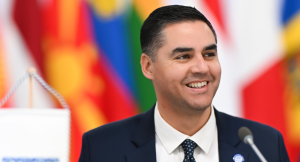
Addressing a press conference shortly before concluding the event, which became the largest ministerial conference to be held in Malta, Borg said his country’s legacy was “not a perfect OSCE, but definitely a more resilient one”.
Describing the OSCE as being “at an impasse, faced with fundamental geopolitical divisions and institutional paralysis”, Borg said Malta felt “compelled” to take over the position a year ago.
“At that moment, Malta rose to the occasion, firmly believing in the purpose of the OSCE and its vital role in promoting peace, security and dialogue,” he said.
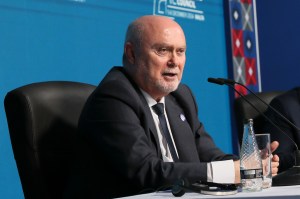
Borg said he was “proud” Malta had achieved consensus on four top leadership positions just before announcing that Türkiye’s diplomat Feridun Sinirlioğlu had been appointed OSCE Secretary General.

A decision on the OSCE budget for 2024, however, was not announced despite being an outstanding issue for the organisation.
Turning to difficulties facing the group, Borg said Russia’s invasion of Ukraine had “not only devastated millions of lives – it has also contested the foundations of Europe’s security architecture”.
In this challenging context Borg resisted calls for expelling Russia, and underscored the need for dialogue.
“I would rather have the other 56 [countries]… telling Rusia on the same table to stop this war and withdraw from Ukraine’s sovereign territory,” he said.
When asked the same question, incoming secretary-general Sinirlioğlu declined to comment.
In his closing remarks at the end of the conference, Borg warned that while a “crisis in multilateralism” persisted, the OSCE is a significant “contributor to peace and prosperity”, adding that Malta would continue its path in its final weeks as chair with the “responsibility and determination”.
.

 EUROPE DIPLOMATIC